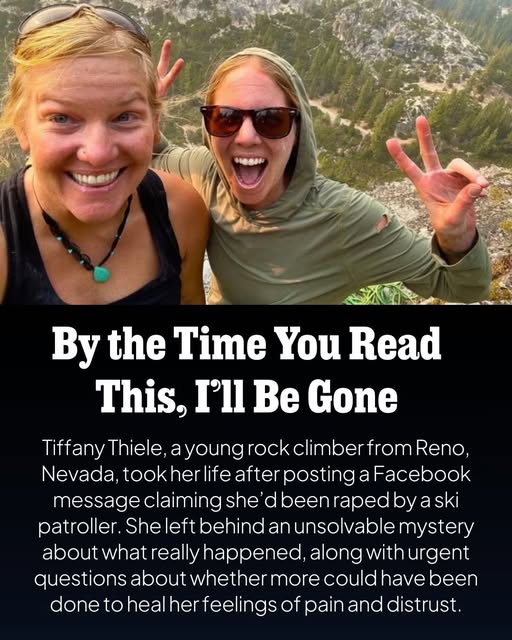
The outdoor and climbing community in Reno, Nevada, is grieving the death of Tiffany Thiele, a young rock climber whose life ended in tragedy after she died by suicide. Her passing has left friends, family, and fellow climbers devastated, and it has sparked difficult conversations about trauma, mental health, and the lingering pain that can follow an experience of profound distress.
In the days leading up to her death, Thiele posted a message on Facebook claiming she had been raped by a ski patroller. The allegation remains unverified, and authorities have not released any official findings about the claim or the circumstances around it. Yet her message, posted publicly and shared widely among those who knew her, revealed the depth of her pain and the sense of isolation she felt. For many who cared about her, the post was the first indication of the emotional turmoil she had been enduring.
Friends describe Thiele as a dedicated climber—fearless, strong, and deeply connected to the outdoor community. Her passion for climbing was woven into her everyday life, and she was known for encouraging others, celebrating their achievements, and pushing herself to reach new levels both physically and mentally. That such a vibrant spirit could be lost so suddenly has shaken many who knew her.
Those close to Thiele say that while she loved adventure, she also carried quiet vulnerabilities. Like many who experience trauma, she struggled to reconcile her internal pain with the perception others had of her. People who followed her online or encountered her at local climbing areas saw a young woman committed to the pursuit of challenge and beauty in nature. But her final message revealed a profound sense of betrayal, hurt, and distrust.
Her death has prompted questions that may never be fully answered. Among them are concerns about how survivors of trauma can access meaningful support, the barriers that often prevent victims from reporting or discussing difficult experiences, and whether more could have been done to reach her in time. Members of the Reno climbing and outdoor community have expressed heartbreak not only over her loss but over the loneliness she felt in her final hours.
Local counselors and mental health advocates emphasize that Thiele’s death is a reminder of how deeply trauma can affect a person, especially when they feel unheard or unsafe. Community groups have begun informally circulating resources and urging open discussions about support systems, hoping to prevent similar tragedies.
Loved ones remember Thiele as compassionate, adventurous, and endlessly curious—a person who found peace on mountainsides and joy in the challenge of each new climb. Her loss is felt not only by her immediate circle but by many who shared chalk, rope, and long trail days with her.
As the community mourns, they also reflect on the importance of listening, believing, and supporting those who share their struggles. Though the circumstances surrounding her pain remain unclear, what is certain is that Tiffany Thiele’s life touched many—and her absence leaves an ache that will not soon fade.
If you or someone you know is struggling, help is available. In the U.S., call or text 988 for the Suicide & Crisis Lifeline.